
Introduction
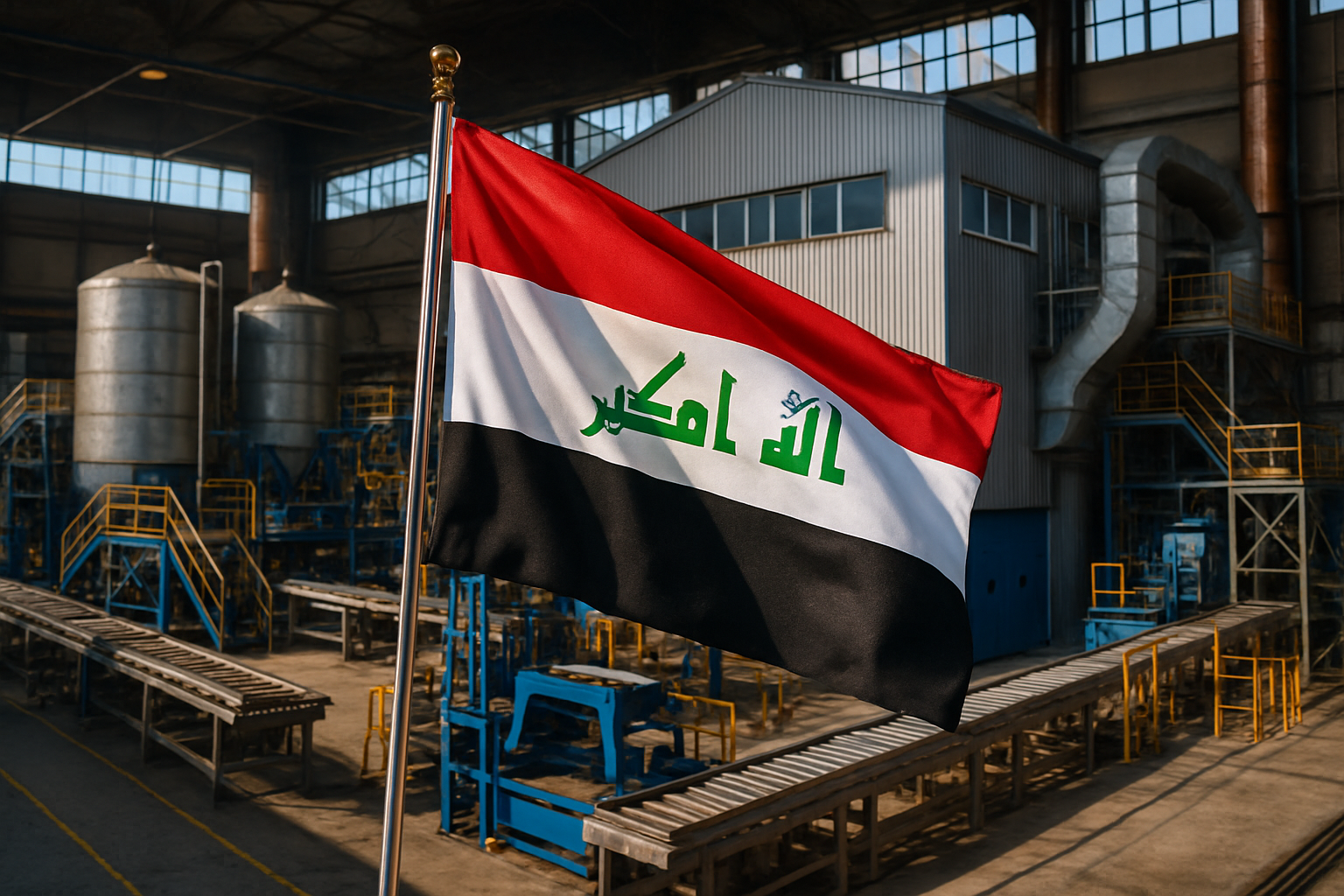
In recent years, Iraq has witnessed growing momentum in the fields of manufacturing and industrial investment, as part of the government’s strategy to diversify sources of income and reduce dependence on oil. Establishing a factory in Iraq represents a strategic opportunity for both local and foreign investors, given the country’s vast market potential and diverse production needs. However, success in this endeavor requires a thorough understanding of the legal and regulatory frameworks governing the establishment and operation of industrial projects.
1. Legal Framework for Industrial Projects
The establishment of factories in Iraq is regulated by a combination of key legislative instruments, including:
Investment Law No. (13) of 2006 (as amended):
This law provides investors with a set of legal guarantees and incentives, including the right to own or lease land allocated for industrial projects for up to 50 years (renewable), in addition to tax and customs exemptions for a period of 10 years.
Companies Law No. (21) of 1997 (as amended):
This law serves as the main legal framework for establishing Iraqi companies and registering branches of foreign companies. No industrial establishment may operate without obtaining a certificate of incorporation issued by the Companies Registrar at the Ministry of Trade.
Industrial Cities Law and the Ministry of Industry and Minerals Regulations:
These regulate the establishment of factories within approved industrial zones equipped with infrastructure and services, providing a stable and secure environment for production activities.
2. Steps to Establish a Factory
The procedures vary slightly depending on whether the investor is local or foreign, but they generally follow a unified legal process:
1. Selecting the Legal Form of the Industrial Entity
A factory can be established as a limited liability company, a joint-stock company, or a branch of a foreign entity.
The capital, activity, and ownership structure are defined in the articles of incorporation and bylaws.
2. Obtaining an Industrial Investment License
The National Investment Commission (NIC) or the relevant Provincial Investment Commission issues the project’s investment license in accordance with Investment Law No. (13).
This license is a key condition for benefiting from tax and customs exemptions.
3. Selecting the Industrial Location
The factory’s site must be within an officially designated industrial city or approved zone, with environmental and municipal clearances obtained from the relevant authorities.
4. Securing Technical and Environmental Approvals
This includes approvals from the Ministry of Environment, Ministry of Electricity, and Civil Defense regarding safety standards, in addition to registering the factory with the Central Organization for Standardization and Quality Control (COSQC) to ensure compliance with Iraqi product specifications.
5. Employee Registration and Operational Compliance
Factories must comply with the Iraqi Labor Law, register their employees with the Social Security Department, and adhere to the legally required ratio of Iraqi workers.
3. Incentives for Industrial Projects
Factories licensed under the Iraqi Investment Law enjoy numerous benefits, including:
Ten-year tax exemption from the date of actual operation.
Three-year customs exemption for importing machinery, equipment, and construction materials.
Free transfer of capital and profits in convertible foreign currency under Central Bank of Iraq regulations.
Permission to hire foreign experts if qualified local labor is unavailable.
4. Legal and Economic Aspects of Operation
Once established, factories are subject to ongoing legal and regulatory obligations, including:
Submitting annual reports to the Companies Registrar and the Investment Commission.
Renewing industrial and environmental licenses periodically.
Complying with Iraqi, Arab, and international production and quality standards.
Economically, investors must also account for operational factors such as energy costs, raw material availability, supply chains, and market demand, all of which determine the project’s long-term viability and profitability.
Conclusion
Establishing a factory in Iraq is not merely a procedural step — it is a strategic endeavor that requires a comprehensive understanding of the legal and economic frameworks governing the industrial sector.
Iraqi laws provide an attractive investment environment and robust incentives, yet they impose detailed obligations related to registration, safety, environment, and employment.
Therefore, consulting a qualified legal advisor is essential to minimize risks and ensure full compliance with Iraqi law.
Hamurabi Iraq offers specialized legal consultancy for investors seeking to establish or expand their industrial operations in Iraq — from concept development to full operational launch — in accordance with the latest legal and regulatory standards.
.jpeg)
.jfif)