
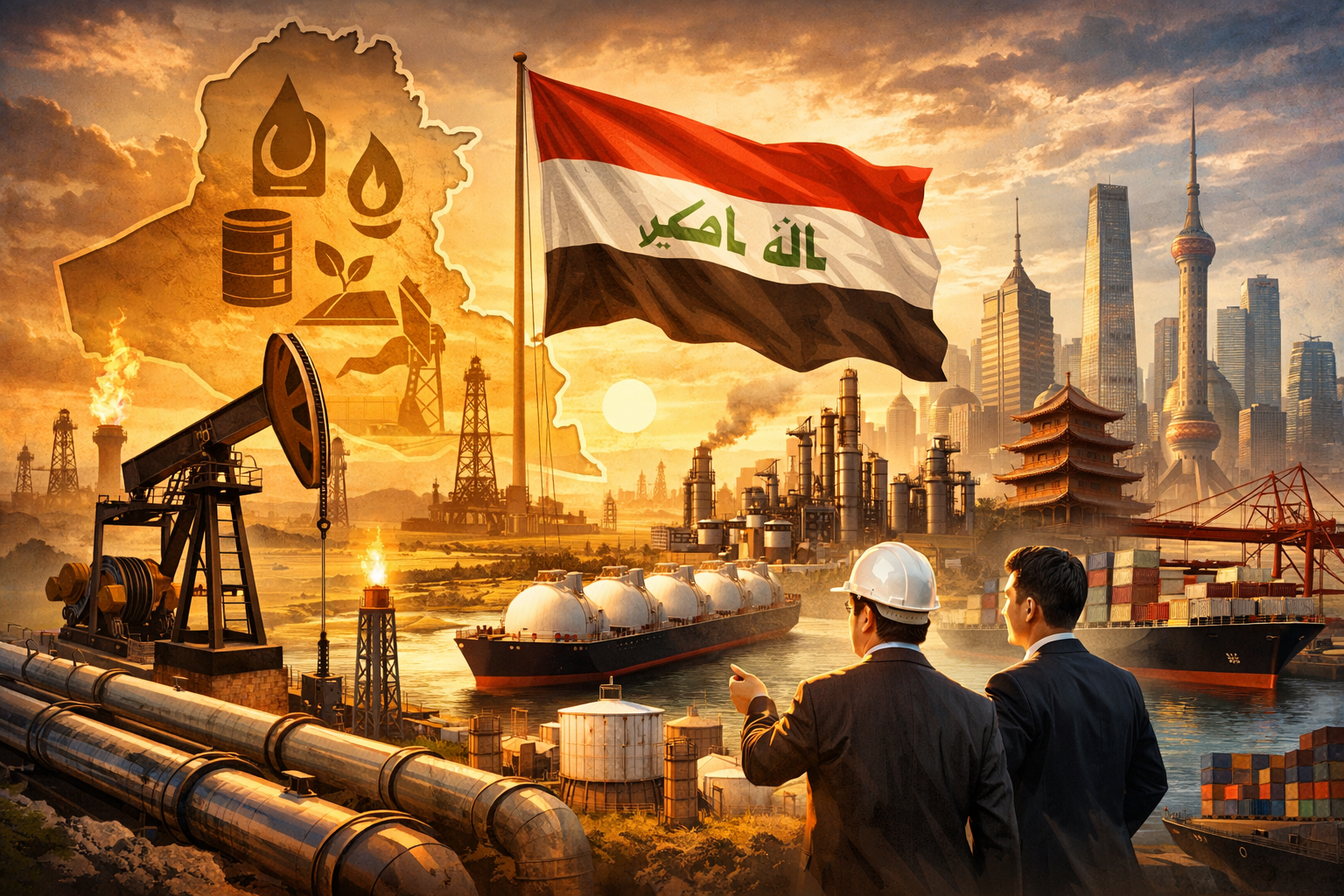
Why Is Iraq One of the Most Attractive Energy Markets for Asian Companies?
Introduction
Iraq’s energy sector represents one of the most strategic and significant sectors in the Middle East, not only due to the scale of its hydrocarbon resources, but also because of its central role in both the Iraqi economy and global energy markets. For Asian companies—particularly Chinese firms—the Iraqi market combines resource abundance, strong growth potential, and a continuous need for investment and development, making it one of the most attractive energy markets in the current decade.
Substantial and Long-Term Resource Base
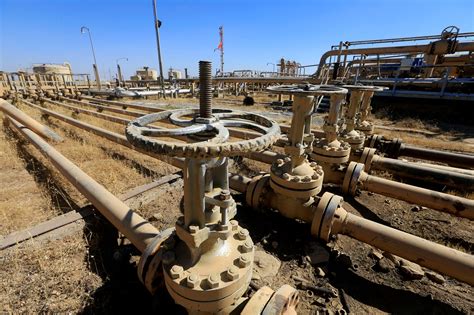
Iraq possesses one of the largest proven crude oil reserves in the world, positioning it as a key strategic player among global energy exporters. This vast resource base provides Asian companies with a fundamental advantage: the ability to plan long-term supply strategies, whether for trading purposes or to secure feedstock for refineries and energy-related industries across Asia.
In addition, the diversity and quality of Iraqi crude—particularly from southern fields—further enhance its attractiveness to technologically advanced Asian refineries.
High Production Levels and Global Market Influence
Iraq ranks among the leading oil producers within the Organization of the Petroleum Exporting Countries, holding a prominent position in terms of daily production volumes. This production scale grants Iraq significant weight in global energy markets and makes engagement with the Iraqi market a key component of Asian companies’ supply and procurement strategies.
For investors, this reality means that opportunities extend beyond crude trading to include field development projects, technical services, and infrastructure related to production and transportation.
Strong Economic Dependence on Energy and Government Incentives
The Iraqi economy is highly dependent on oil and gas revenues, which constitute the overwhelming majority of state income and export earnings. This dependence creates a strong and sustained governmental incentive to maintain production, secure exports, and further develop the energy sector.
From the perspective of Asian companies, this translates into a market where energy projects are a top political and economic priority, increasing the likelihood of new initiatives, expansions of existing projects, and long-term partnerships with public entities.
Associated Gas as a High-Value Investment Opportunity
One of the most compelling opportunities within the Iraqi energy market lies in associated gas produced alongside crude oil, much of which has historically remained underutilized. This gas represents a significant opportunity to convert waste into value through collection, processing, and utilization in power generation or downstream industries such as chemicals and fertilizers.
For Asian industrial companies, investment in associated gas projects offers a stable local energy source, reduces operational risk, and enables the development of integrated projects with long-term economic returns.
Expansion of Refining and Energy-Related Industries
Beyond upstream production, Iraq is increasingly focused on expanding its refining capacity and energy-related industries, aiming to reduce reliance on imports and increase domestic value creation. This strategic direction opens the door for Asian companies to participate in refinery projects, upgrades of existing facilities, and the development of chemical and fertilizer industries.
Practical experience indicates that Asian companies, with their engineering expertise and financial capabilities, are often regarded as preferred partners for such large-scale projects.
Legal Framework and Risk Management Considerations
Despite the attractiveness of the opportunities, operating in Iraq’s energy sector requires a thorough understanding of the legal and regulatory framework, particularly with respect to contracts, institutional competencies, export routes, and dispute resolution mechanisms.
For Asian companies, success in the Iraqi market depends not only on the economic viability of projects, but also on robust legal structuring, regulatory compliance, and effective management of legal and contractual risks.
Conclusion
Iraq brings together a rare combination of strengths in the energy sector: vast resources, high production levels, continuous investment needs, and broad opportunities in associated gas, refining, and downstream industries. These factors collectively position Iraq as one of the most attractive energy markets for Asian companies today.
However, transforming these opportunities into sustainable and successful projects requires a balanced approach that integrates commercial and investment vision with precise legal risk management and sound contractual frameworks.

.jpeg)
.jfif)