

.jfif)
As part of its annual fisheries enhancement strategy, Iraq’s Ministry of Agriculture has released 250,000 fingerlings of carp species into the Tigris River in northern Baghdad. This initiative aims to strengthen national food security, diversify income sources, and preserve native fish biodiversity, while supporting the country’s aquaculture development.
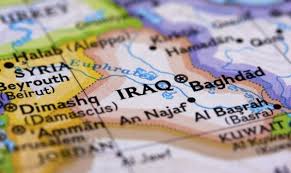
Iraq is rapidly evolving into a strategic business hub. Fuelled by high oil revenues, bold infrastructure programs, improved governance, and a dynamic non‑oil sector, the country offers unique advantages—from access to regional markets to development incentives. This article highlights the key drivers that make Iraq a compelling destination for global investors.

Iraq has officially rolled out the TIR international transit system across all its border crossings, aiming to strengthen its trade capabilities and regional connectivity. The system is expected to enhance Iraq’s position in global commerce and support infrastructure development as part of a broader strategic vision.

The UK’s new DMCC Act, effective April 2025, gives the CMA power to fine firms up to 10 % of global turnover for consumer‑law breaches without court action, applies extraterritorially to any business affecting UK consumers and has already reshaped enforcement in cases such as Amazon’s fake‑review probe. Firms worldwide must adopt proactive compliance or face swift, severe penalties.

Saudi Aramco, officially known as the Saudi Arabian Oil Company, is the world’s largest integrated oil and gas company. Founded in 1933 and fully owned by the Kingdom of Saudi Arabia, Aramco has developed into a global leader in energy production, refining, petrochemicals, and gas development. With massive reserves, unmatched production capacity, and financial dominance, the company is pivotal to global energy security and the economic ambitions of Saudi Arabia’s Vision 2030.

Basra Oil Company (BOC) — a wholly state‑owned entity under Iraq’s Ministry of Oil — dominates domestic oil output and export operations from the country’s southern super‑giant fields. Based in Basra and controlling assets like Rumaila and Majnoon, BOC directs more than 80% of Iraq’s total oil production and export capacity, including nearly all cargoes shipped from southern ports. The company also co‑leads major infrastructure projects like the 4.56 billion USD Basrah–Haditha pipeline approved in December 2024. With an annual capacity to add 200,000 bpd if requested by OPEC, BOC remains the unrivaled anchor of Iraq’s hydrocarbon sector. (Data current as of mid‑2025.)

Commercial Law (also known as Business or Mercantile Law) governs the rules, rights, and obligations associated with trade, transactions, and commerce. In contrast, Corporate Law (or Company Law) deals with the internal structure, governance, and legal lifecycle of corporate entities. Although both fields intersect, their core foci are distinct: one regulates how businesses engage in the marketplace, the other governs how companies are constituted, managed, and dissolved.

Despite its challenges, Iraq is re-emerging as a frontier market rich in untapped potential—thanks to generous investment incentives, strategic infrastructure projects, and growing economic stability. This article highlights five compelling reasons why foreign investors should consider Iraq as a high-opportunity destination.

The Iraqi Ministry of Planning has announced ambitious revenue targets within its 2024–2028 five-year development plan, projecting a total of IQD 710 trillion in revenues. The majority will stem from the oil sector, while non-oil revenues will contribute significantly to diversifying the economy. The plan also outlines substantial investment allocations to achieve targeted economic growth and sectoral development.
Patent and industrial design registration in Iraq is regulated by Law No. 65 of 1970, which sets clear rules for eligibility, novelty, and ownership. This article explains who can apply, the legal requirements for protecting inventions and designs, and the penalties for infringement—offering innovators, businesses, and institutions a complete guide to safeguarding their intellectual property in Iraq.