

The Iraqi Securities Commission has launched an ambitious strategic plan aimed at enhancing the attractiveness of the domestic capital market, particularly for foreign investors. The plan is built on three core pillars: simplifying operational and legal procedures to accelerate and increase the flexibility of the investment process; strengthening the protection of investors’ rights through the application of international best practices; and providing advanced electronic platforms that ensure a secure and transparent investment environment. These initiatives, which form part of a broader effort to deepen the market and diversify investment instruments, seek to position Iraq on the map of attractive financial hubs in the region, thereby opening new investment horizons that support the momentum of the national economy. The success of this strategy depends on translating the announced directions into clear, enforceable regulatory mechanisms that reinforce confidence and achieve sustainable growth.
The article addresses the legal framework and practical steps for company formation in Iraq, clarifying that the process is not a mere formality but a precise legal path that begins with the founders' agreement, subscription to capital, and its deposit with a licensed bank. It highlights the role of the Founders' Committee in joint-stock companies and their extended responsibilities until the first board of directors is elected. The article reviews the official application stage, where the application is decided upon within ten days, and a certificate of incorporation is granted, which confers legal personality upon the company. It also details the guarantees afforded to founders in the event of application rejection, ranging from a reasoned refusal decision to the right to object before the Minister of Commerce and then before the judiciary, with the possibility of submitting a new application after remedying the grounds for rejection. This guide constitutes a clear roadmap for investors to build business entities grounded in legal certainty.

This article examines the current landscape of green investment and renewable energy technologies in Iraq from a legal and investment perspective, with a focus on solar energy opportunities, green financing, contracts, licensing, and the management of regulatory risks. It explains that the success of renewable energy projects in Iraq requires a clear legal framework and specialized advisory services to protect investors and ensure compliance.
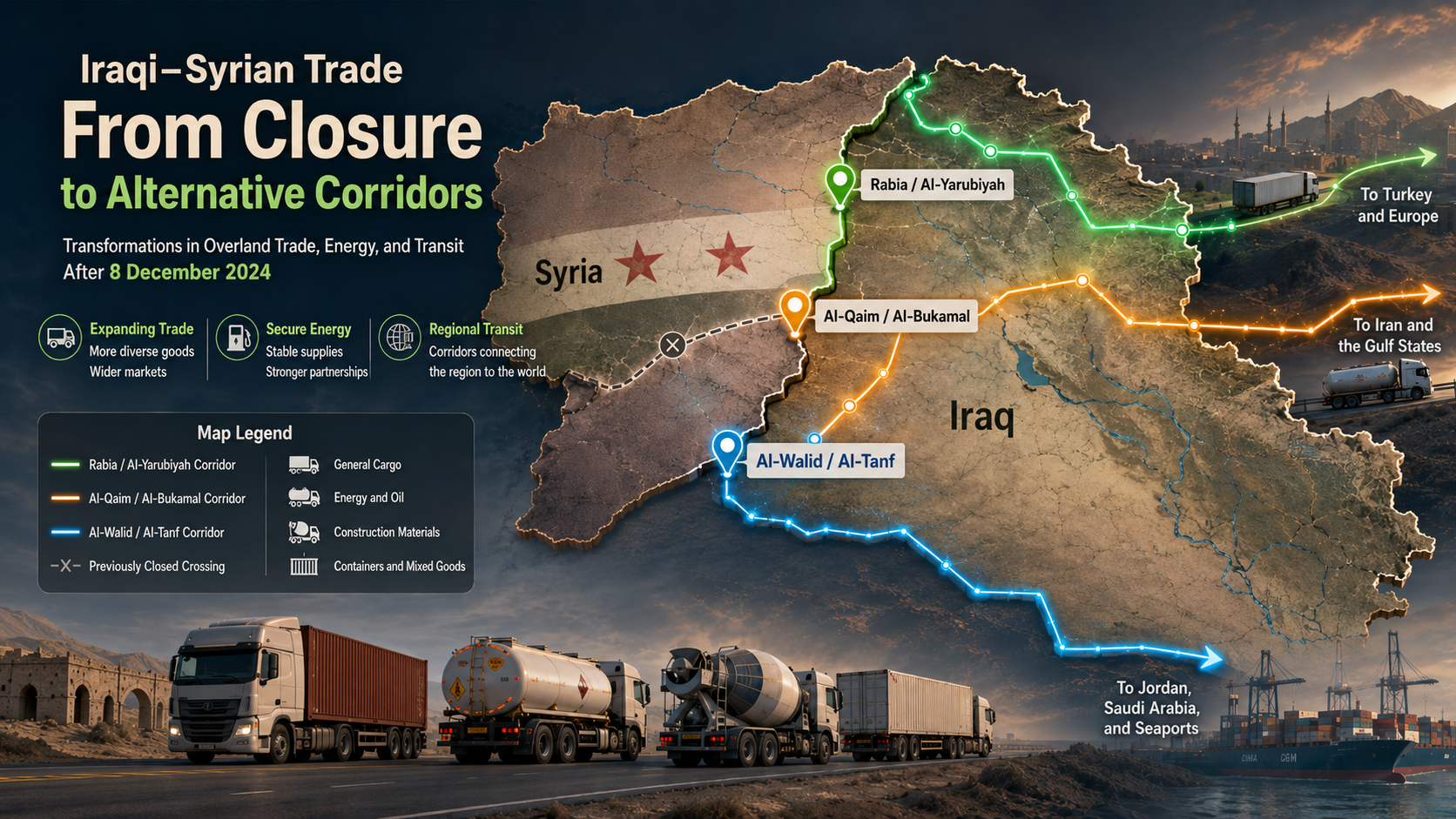
This article traces the development of trade relations between Iraq and Syria from 8 December 2024 to 12 June 2026, beginning with the closure of the Al-Qaim crossing after the fall of the Assad regime, moving through the phase of political efforts to reopen the borders, and then the resumption of trade and passenger movement through Al-Qaim/Al-Bukamal in June 2025. The article highlights 2026 as the year of logistical transformation, marked by the opening of the Al-Walid/Al-Tanf and Rabia/Al-Yarubiyah crossings, the launch of documented shipments of oil, fuel, and cement, and the passage of regional transit shipments. It concludes that the relationship evolved from trade disruption into a multi-crossing network, despite the absence of published official figures for the total volume of trade exchange during the period.
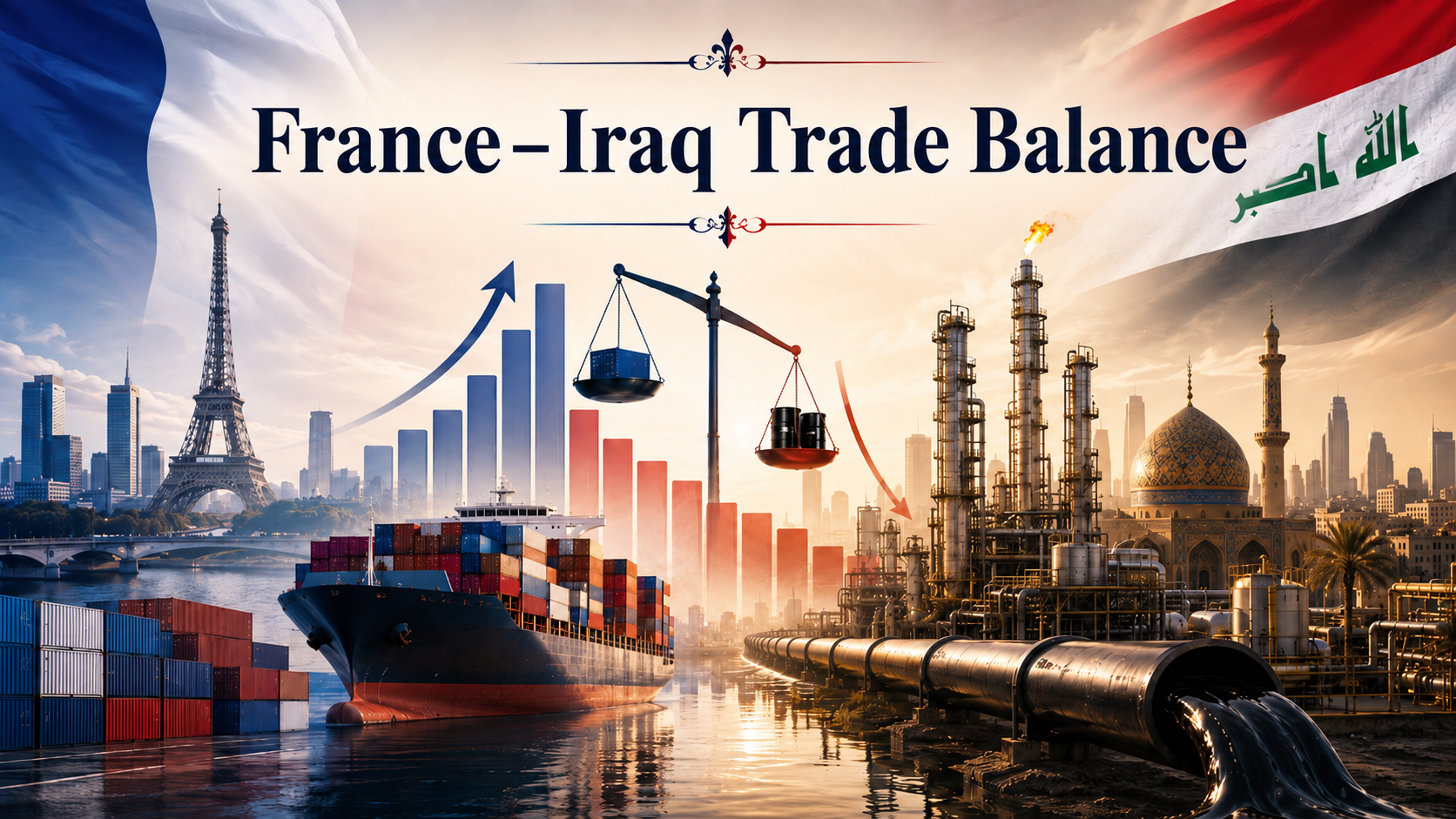
This article examines the development of the goods trade balance between France and Iraq during the 2020–2026 period, based on official French data. It explains France’s transition from a limited surplus in 2020 to a continuing trade deficit since 2021, which reached its peak in 2024 before declining partially in 2025. This deficit is primarily linked to the increase in France’s imports of Iraqi crude oil and petroleum products, compared with diversified French exports that include pharmaceutical, chemical, food, machinery, and equipment products. The article also presents the latest partial data available through April 2026, which confirm the continuation of France’s trade deficit with Iraq and the dominance of the energy sector in French imports.

Before entering the Iraqi market, international companies should assess more than the commercial opportunity. The appropriate legal structure, investment licensing, sector-specific approvals, local counterparties, and post-entry compliance can materially affect how a project should be established and operated. This article outlines five legal questions that should be addressed before implementation begins.